‘ZAMSURECO II IS OWNED BY THE PEOPLE’ — FORMER GM JESUS CASTRO (1st of a Series)
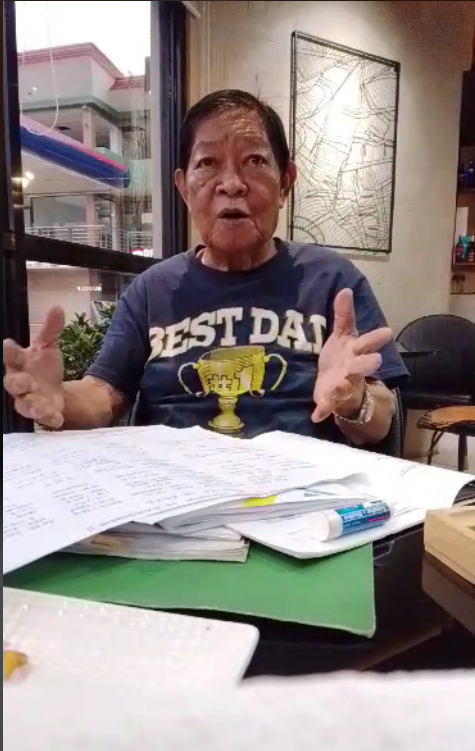
“ZAMSURECO II is owned by the people. It is a cooperative.” This was the emphatic statement of former Zamboanga del Sur II Electric Cooperative (ZAMSURECO II) General Manager Jesus Y. Castro, who spent three decades with the electric cooperative and served as its second general manager during its formative years. Castro, who was with ZAMSURECO II from its early beginnings until his retirement in 2009, recalled how the electric cooperative was built from the ground up, not as a private corporation, but as a cooperative organized around its member-consumers, who were also its owners.
According to Castro, ZAMSURECO II started by first organizing the people who would become its members. He recalled that prospective members paid registration fees and were organized as members of the cooperative in coordination with the Cooperative Development Authority (CDA). “The first thing we did was organize the members-consumers-owners,” Castro said, emphasizing that the people who joined the cooperative were not merely customers but were part of the ownership structure of the organization.
Castro recalled that ZAMSURECO II’s initial capitalization was acquired through a loan obtained in the name of the cooperative and its member-consumer-owners. The loan was intended to be paid from the revenues generated by the cooperative as it began operating and providing electricity to its service area. He said the cooperative started with an initial loan of about ₱20 million, which eventually grew as ZAMSURECO II expanded its operations and facilities. Over the succeeding years, the cooperative had to secure additional financing to support expansion and improvement of its electrical system. Castro recalled that among the major borrowings was an amount of about ₱700 million, reflecting the scale of investment required to expand the cooperative’s operations.
When Castro retired in 2009, he said ZAMSURECO II still had a remaining balance of nearly ₱100 million in obligations. But for Castro, the existence of these obligations did not erase the fundamental character of ZAMSURECO II as a cooperative. The assets accumulated by the cooperative, he explained, were ultimately connected to the cooperative’s members - the very consumers who had organized themselves, paid membership fees and whose electricity payments sustained the cooperative.
ADVERTISEMENT
Castro also explained why applicants for a new electric connection are required to pay a membership fee and attend a membership seminar. These requirements, he said, were not merely administrative procedures but were intended to formally make the electricity consumer a member-owner of the cooperative and to orient them about their rights, responsibilities and role in the organization. In a cooperative, he emphasized, the consumer is therefore more than simply a customer who purchases electricity. The consumer is also a member of the organization that provides the service.
This distinction, Castro said, was also the reason why ZAMSURECO II had to remain accountable to its membership through the General Membership Assembly. During his time with the cooperative, he recalled that management regularly reported to the members through the annual assembly, providing an avenue for consumers to be informed about the cooperative’s operations and financial condition and to raise concerns about matters affecting the organization they collectively owned. For Castro, this system was an essential component of cooperative governance because members were not supposed to be passive electricity consumers; they were supposed to have a voice in the affairs of the cooperative.
Castro said, however, that he could no longer fully explain what happened to ZAMSURECO II after his retirement in 2009 and how the cooperative evolved over the succeeding years. He did recall that at one point he became a member of the cooperative’s Board of Directors. It was also during the period when the cooperative’s board structure and representation became a major issue. Castro pointed to 2019, when the Board of Directors was abolished, saying that this was the point when, in his view, ordinary members lost a significant avenue for representation and their voice in the management of ZAMSURECO II.
The question of dividends also came up when Castro discussed the cooperative’s history. If the people own the cooperative, why did they not receive dividends? Castro explained that during his years as general manager, ZAMSURECO II did not reach a point where its financial position allowed the cooperative to regularly distribute dividends to its members. When he retired, he said, there were still outstanding obligations. However, Castro stressed that during his administration, the cooperative was able to meet its financial obligations without falling behind in payments. “There was never a time that we were late in our payments,” he recalled.
He also cited the cooperative’s relatively low system loss during his tenure, which he said was around 10 percent. Keeping system losses low meant that more of the electricity purchased by the cooperative could be properly accounted for and paid for by consumers, helping strengthen its ability to meet its obligations and sustain operations. Rather than distributing profits as conventional corporate dividends, Castro recalled that the cooperative could provide cash incentives or other forms of benefits while keeping electricity rates at a level that remained affordable to its member-consumers.
For Castro, the benefits of cooperative membership were not necessarily limited to receiving cash dividends. A cooperative could also return value to its members through reasonable power rates, reliable service, controlled costs and other benefits made possible by sound management. His recollection offers a different perspective on the continuing debate surrounding ZAMSURECO II and its future.
At its core, Castro said, ZAMSURECO II was created by people who organized themselves to bring electricity to their communities. They paid membership fees, became members, assumed responsibility for the cooperative’s obligations, and supported the organization through the revenues generated from electricity sales. Loans were obtained to build and expand the system, while the cooperative accumulated assets and infrastructure intended to serve its member-consumers.
That history, Castro emphasized, is why the term “member-consumer-owner” is important. Those who receive electricity from the cooperative are not merely customers in the ordinary commercial sense. They are members of an organization established to serve them. And if the cooperative was created by its members and for its members, then questions concerning its management, assets, finances, governance and future direction are ultimately questions that concern the very people who built and sustained it.
Castro’s account leaves a fundamental question for today’s ZAMSURECO II members: If the cooperative was created by the people and for the people, how much voice should those people have in determining its future?

_20251213_030536.jpg)