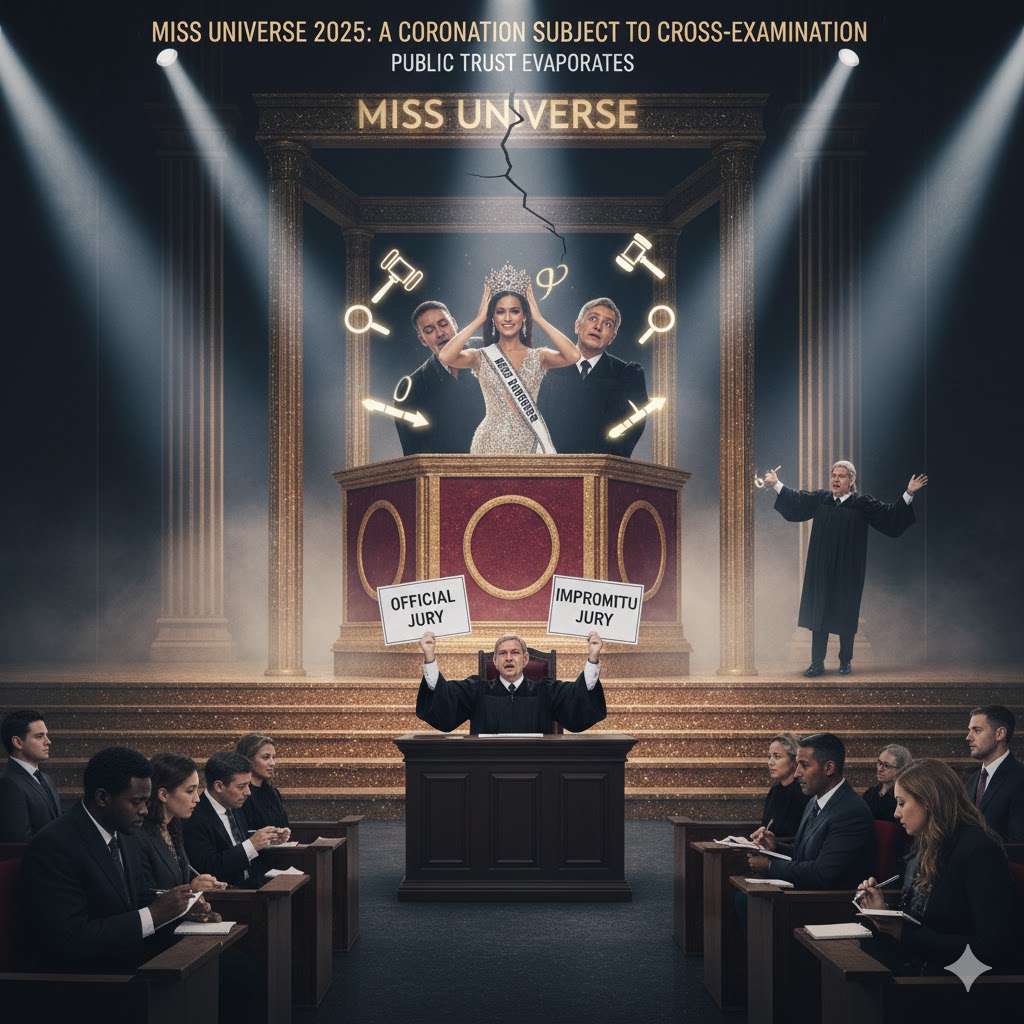
Miss Universe 2025: A Coronation Subject to Cross-Examination
Miss Universe managed to outshine its own contestants this year — not with beauty, but with confusion. A judge resigned, contestants walked out, and the public suddenly smelled something cooked hotter than the stage lights. When a pageant starts explaining the difference between an “official jury” and an “impromptu jury,” it begins to feel less like a global event and more like a procedural anomaly in sequins. The crowns stayed polished, but the credibility cracked like a mirror dropped backstage.
What makes this fiasco legally fascinating is how a private beauty contest suddenly behaves like a public institution with constitutional obligations. The judge’s resignation reads like a dissenting opinion, the contestant walkout resembles a collective motion for reconsideration, and the audience backlash sounds like a class action of disappointment. Miss Universe insists no rigging occurred, but when the rules resemble interpretive dance and the scoring looks like abstract art, public trust doesn’t just slip — it evaporates. Fairness may be subjective, but opacity is not.
ADVERTISEMENT
In the end, the scandal says less about the winner and more about the machinery behind the stage. Pageants promise glamour and fairness, but operate on criteria written in disappearing ink, influenced by sponsors, optics, and backstage diplomacy. This year simply peeled back the glitter to expose the wiring — tangled, questionable, and weirdly familiar. The universe didn’t lose its shine; it merely revealed what happens when beauty meets a system overdue for cross-examination.