Hero image

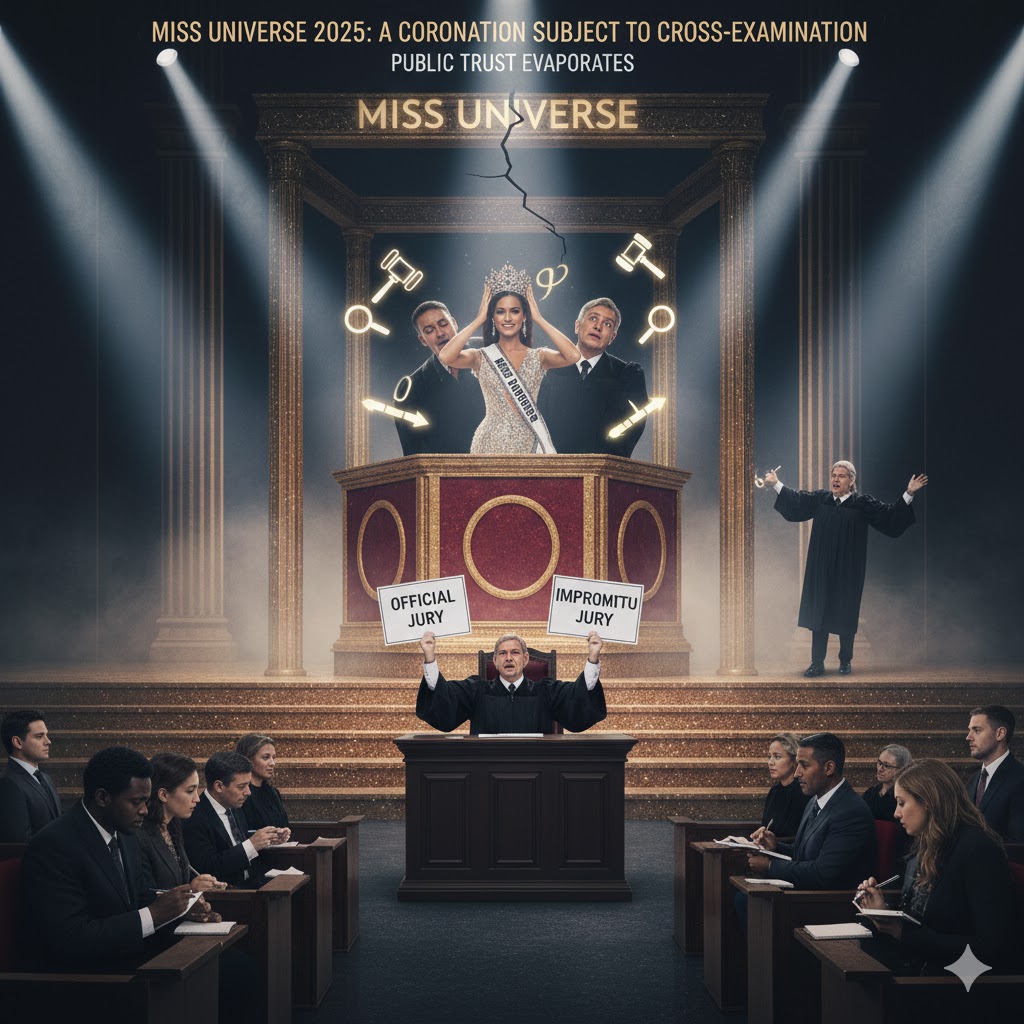
Crowns and Ballots and The Uneven Standards of Choosing Our Winners In the Philippines, two arenas command national attention with almost equal intensity: beauty pageants and elections.

Daphne Santuyo

One dazzles with gowns, grace, and rehearsed eloquence; the other, with promises, slogans, and the theater of public service. At first glance, they may seem worlds apart. But at their core, both are exercises in judgment, careful, deliberate processes meant to determine who among a field of hopefuls is most deserving of a crown or a mandate.

Yet the standards we apply in each reveal a striking and uncomfortable contrast.

In a beauty pageant, scrutiny is relentless. Candidates undergo weeks sometimes even months of preparation that go far beyond the surface. Behind every polished smile is a regimen of discipline: early mornings for physical training, long hours of pasarela practice, voice coaching, personality development, and immersion in their chosen advocacies. They learn how to carry themselves with quiet confidence, how to articulate thoughts under pressure, and how to remain composed even when the spotlight feels unforgiving.

When they step onto the stage, they are expected to be complete individuals. The evening gown competition is not merely about elegance but about bearing and how a woman owns her presence, how she commands attention without saying a word. The swimsuit segment, often debated, still demands confidence, fitness, and self-assurance. And then comes the most decisive moment: the question-and-answer portion, where intellect meets instinct. In a matter of seconds, a candidate must reveal clarity of thought, depth of understanding, and authenticity of character.

Judges evaluate them across multiple dimensions. Beauty, yes, but also intelligence, communication skills, advocacy, and overall impact. Even the smallest inconsistency can be magnified. A vague answer, a rehearsed but hollow statement, or a disconnect between words and advocacy can cost a candidate everything. The expectation is exacting: a beauty queen must not only look the part, she must live it.

Now, place this beside the electoral process.

In theory, elections should demand even more. Public officials are not symbolic figures; they are decision-makers, stewards of public funds, architects of policy, and voices of the people. They are expected to possess competence, integrity, foresight, and a genuine commitment to service. Their “platform,” much like a pageant advocacy, should be clear, actionable, and rooted in real understanding of the issues.

But in practice, the standards often feel uneven.

Commercial Ad

Candidates for public office step onto a different kind of stage, the campaign trails instead of runways, motorcades instead of spotlights. They shake hands, deliver speeches, and present themselves to the electorate. Yet unlike beauty queens, they are not always subjected to the same level of structured scrutiny. Some avoid debates which is the closest equivalent to a pageant’s Q&A without consequence. Others rely on familiar names, political lineage, or sheer popularity rather than demonstrated capability.

Where a beauty queen is expected to speak with precision, a candidate for public office may get away with broad, undefined promises. Where a pageant contestant must defend her advocacy with conviction and detail, a politician can present platforms that are aspirational but lacking in substance. Where inconsistencies would disqualify a queen, they are sometimes overlooked or even normalized in politics.

The contrast becomes even more vivid when one considers accountability.

A crowned beauty queen carries her title with responsibility. She is expected to embody grace not just on stage but in everyday life. She attends events, engages with communities, and advances the causes she championed during the competition. Her every action is observed, her words weighed, her conduct scrutinized. A misstep can lead to public criticism, even the loss of her title.

Public officials, meanwhile, hold power that extends far beyond symbolism. They make decisions that affect livelihoods, education, healthcare, and national direction. And yet, accountability can feel less immediate, less exacting. Campaign promises are sometimes forgotten. Performance is not always measured against clear benchmarks. The public, while vocal during elections, can grow quieter once leaders assume office.

This disparity raises a difficult question: why do we demand near-perfection from those who compete for crowns, yet show greater tolerance for those who seek to govern?

Part of the answer lies in perception. Beauty pageants are designed as controlled environments with defined criteria and visible judging processes. Elections, on the other hand, are shaped by complexity—social realities, economic conditions, access to information, and deeply rooted political cultures. But complexity should not mean compromise when it comes to standards.

There is also the matter of emotional engagement. Pageants invite admiration and aspiration; politics often invites division or fatigue. When expectations are lowered, scrutiny follows. When scrutiny weakens, standards erode.

And yet, both arenas ultimately depend on judgment.

In both cases, there is an audience, a public entrusted with the power to choose. In pageantry, the audience demands excellence and often gets it. Candidates rise to the occasion because they know the bar is high. In politics, the bar can shift depending on what voters are willing to accept.

The irony is striking: in one arena, we crown a woman who represents ideals, grace, intelligence, and purpose. In the other, we elect leaders who must turn ideals into reality. And yet, the path to the crown is often steeper than the path to power.

Perhaps the lesson is not to diminish one or elevate the other artificially, but to recognize what is possible when standards are clear and expectations are firm. Beauty queens are not perfect, but they are prepared, disciplined, and measured against defined criteria. Public officials should be no less. Imagine an electoral culture where candidates are assessed with the same rigor, where clarity of thought matters as much as charisma, where consistency outweighs convenience, where integrity is non-negotiable. Imagine voters who, like seasoned judges, listen closely, question deeply, and decide carefully.

Because while a crown may symbolize honor, a ballot carries consequence.

And in the end, the standards we uphold, whether on stage or at the polls. will always determine not just who wins, but what kind of nation we choose to become.

Commercial Ad

Investigative

Municipal

Provincial

Editor's Note

Chizmosong Barbero

Campus Beat