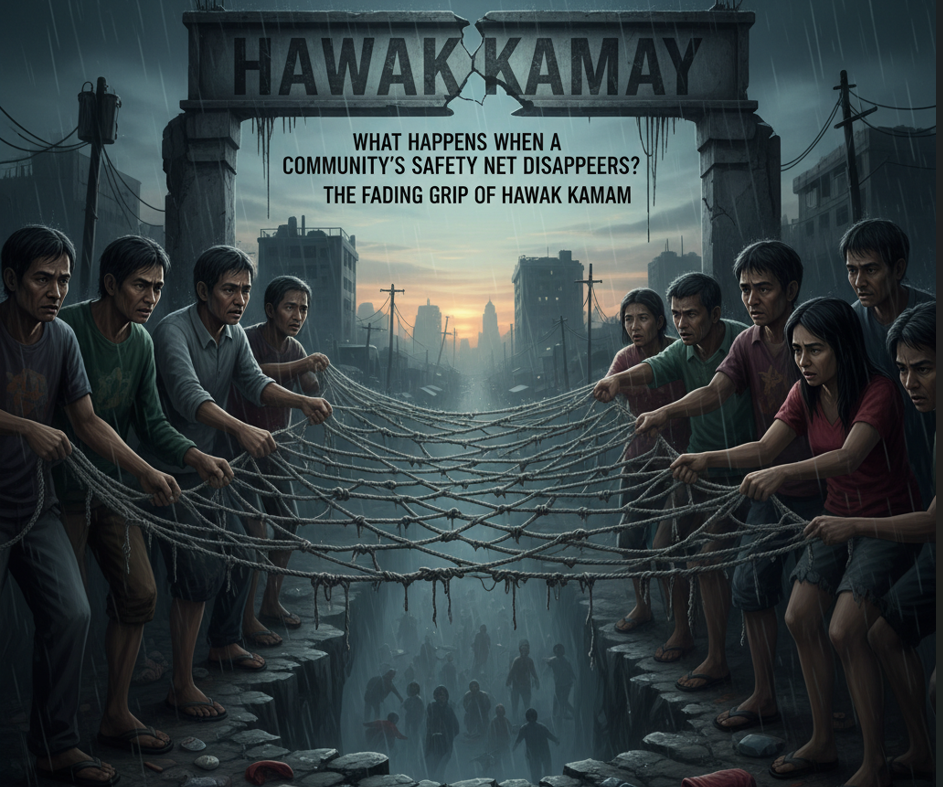
What Happens When a Community’s Safety Net Disappears? The Fading Grip of Hawak Kamay
It was a promise built on trust and the Filipino spirit of damayan (mutual aid). For a modest monthly contribution, which started at Php40 and later reduced to Php20, members of the “Hawak Kamay”, a self-help association modeled to “Dayong” which is present in some communities in Zamboanga Sibugay were assured of one thing: when their time came, their families would not face the crushing financial burden of a wake and funeral alone. They have “Hawak Kamay, Walang Iwanan” to count on.
For years, this system provided peace of mind to many. But today, Hawak Kamay has seemingly vanished, leaving paying members with empty hands and a pressing question:
What happened to the money we paid for years? The concept behind Hawak Kamay was simple and noble. In a community, members would pool their money. When a member passed away, a significant sum would be released to their family to cover funeral costs, casket services, and other expenses associated with the wake.
It operated on a principle of shared risk. The small, regular contributions of the many would support the few who needed it at any given time. For those with limited access to formal insurance or pre-need plans, Hawak Kamay was more than a financial arrangement; it was a pact, a guarantee that the community would be there in the darkest of times. " e name itself, “Hawak Kamay” (Holding Hands), perfectly encapsulated its mission.
ADVERTISEMENT
The reduction of the contribution from Php40 to Php20 may have been the first sign of trouble. While seemingly a relief for members, it drastically cut the association’s income. " e “natural death” of Hawak Kamay suggests it wasn’t sudden scam, but a slow, quiet failure of its operational model. " e Harsh Reality: Where Did the Money Go?
For members who faithfully paid for years, the outcome is likely to be a painful one. The money is almost certainly gone, and legally, there is very little that can be done. Here’s why: It wasn’t a savings account. " e crucial point to understand is that Hawak Kamay was not an investment or a bank. " e money members paid was not being saved and set aside specifically for their own future funeral. Instead, it was placed into a common pool of funds, or can anything be done? " e contributions made by current members over the past few years were used to pay for the funerals of other members who passed away during that time. " e money was spent fulfilling the association’s purpose, even if it was unsustainable.
Now, who pays for the living members funerals?
In short, the contributions were payments for a shared-risk service that has now ceased. For those who paid in but never got to claim a benefit, the money is unfortunately unrecoverable. It’s a difficult lesson on the difference between a community promise and a legally-backed financial product. It serves as a stark reminder that while the spirit of bayanihan is invaluable, it must be supported by a sound, transparent, and sustainable structure to truly last.