 Photo credit to Gerry Cacanindin
Owning Our Faults Together: A Citizen’s Reflection on the Courage to Confess, Inspired by Fr. Flavie Villanueva
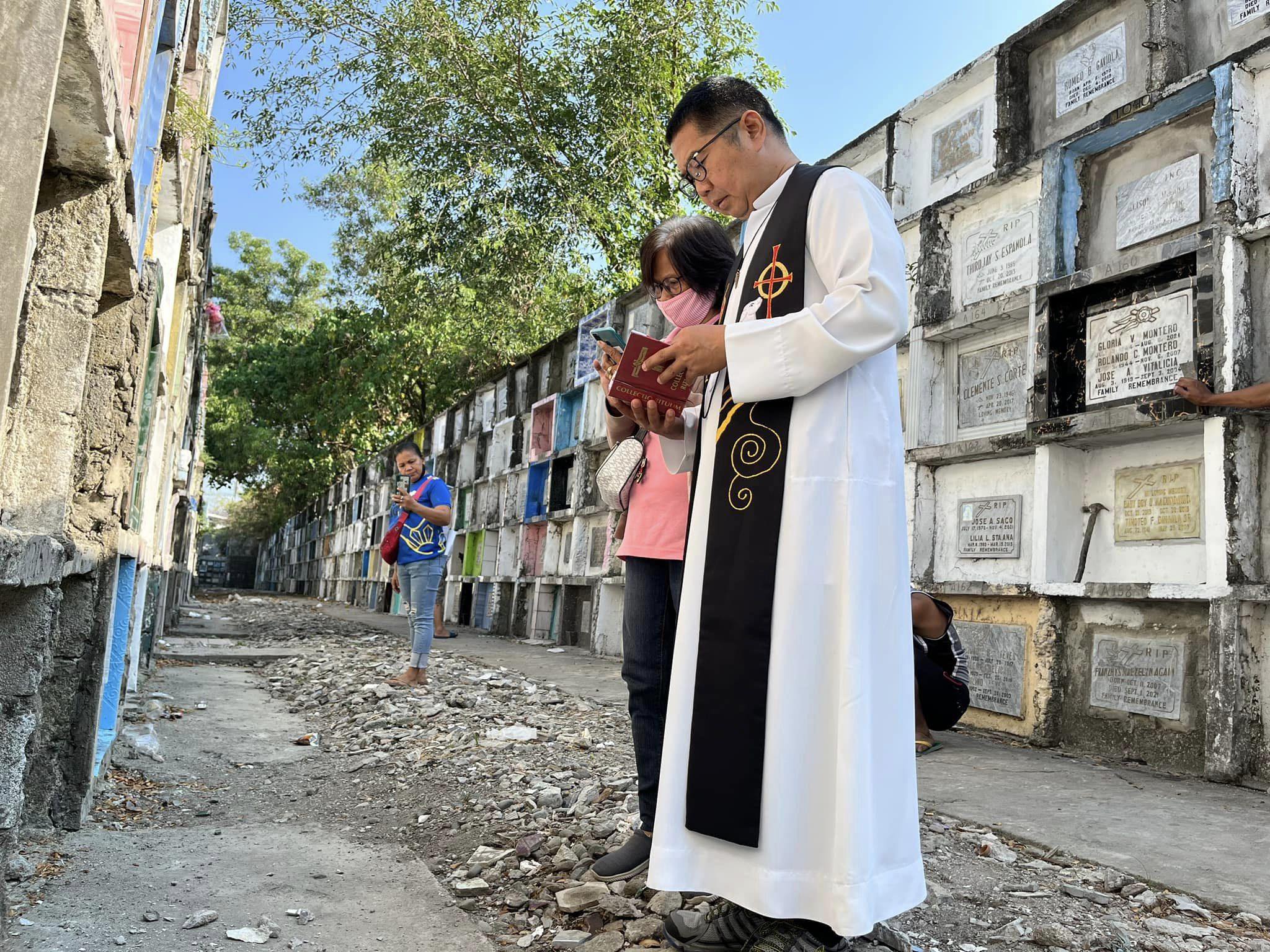
Fr. Flavie Villanueva is a Filipino Catholic priest of the Society of the Divine Word (SVD), a Ramon Magsaysay Awardee, and a leading advocate for healing among the urban poor, recovering drug dependents, homeless individuals, and families of victims of violence. He has openly admitted that he struggled with drug dependence in his youth and early adulthood—long before he became a priest, a truth that has profoundly shaped his compassionate, nonjudgmental, and grounded ministry. From his own journey of recovery emerged Paghilom, a community-based initiative focused on healing, restoration, and accompaniment for those wounded by addiction, trauma, and social injustice. Widely respected for bringing the Church to the streets rather than confining it within walls, Fr. Flavie embodies a priesthood rooted in honesty, humility, and the conviction that no one is beyond redemption.
Every Sunday, the words rise together like a single breath from many lungs: “I confess to almighty God, and to you, my brothers and sisters, that I have sinned…” For some, the prayer is familiar to the point of routine. For others, it still lands with a quiet sting. But for Fr. Flavie Villanueva, those words are not a formality. They are a way of life. An invitation to honesty that refuses to hide behind piety.
Fr. Flavie is known for walking close to the edges of human experience, where wounds are visible and stories are unfinished. In his ministry, he meets people who carry shame like a second skin, men and women who believe holiness means pretending to be flawless. Yet he reminds them, again and again, of a simple but liberating truth: no one is perfect, and no one is sinless. This is not a failure of faith, it is the very condition that makes faith necessary.
The Church’s confession begins simply: “I confess to almighty God.” Many are comfortable with that part. Confessing silently to God feels safe. It can be done in the privacy of one’s heart, unseen, unnamed, unexposed. God already knows our sins, we reason, so whispering them to Him costs little pride.
But the prayer does not stop there. It dares us to go further: “and to you, my brothers and sisters.”
That line, Fr. Flavie often reflects, is where the real courage begins.
ADVERTISEMENT
If no one is perfect and no one is sinless, then there is no reason to pretend otherwise. The prayer itself makes this clear. It names everything: “in my thoughts and in my words, in what I have done, and in what I have failed to do.” Even our silences are brought into the light. Even the good we neglected to do is acknowledged. The Church does not ask for selective honesty. Only the truth.
In a world obsessed with curated images and moral posturing, Fr. Flavie believes this communal confession is quietly revolutionary. To confess not only before God but before one another dismantles the illusion that faith is a solo performance. It reminds us that sin is not a private embarrassment but a shared human reality, and so is grace.
When we say, “through my own fault, through my own fault, through my most grievous fault,” we are not crushing ourselves with guilt. We are standing up straight and taking responsibility. Fr. Flavie often points out that humility is not self-hatred. It is clarity. Excuses keep us trapped. Admission sets us free.
More importantly, confessing to our brothers and sisters creates space for mercy to move not only vertically or directly from God to the sinner, but horizontally, from one wounded person to another. God forgives in secret. Yes, but healing often deepens when forgiveness is witnessed, shared, and echoed in compassion. When we admit our brokenness together, we give one another permission to stop pretending.
Fr. Flavie has seen this truth lived out among the poor, the wounded, and the forgotten, people who already know that perfection is an illusion. They often understand the heart of the prayer more deeply than those who appear put-together. They know that faith is not about being sinless, but about being honest enough to ask for mercy. The prayer ends with hope: “Therefore I ask blessed Mary ever-Virgin, all the Angels and Saints, and you, my brothers and sisters, to pray for me to the Lord our God.” We do not confess and then walk away alone. We ask to be accompanied. We ask the community to help carry what we cannot bear by ourselves.
For Fr. Flavie Villanueva, this is the Church at its most authentic. Imperfect, wounded, truthful, and trusting. Sinners standing shoulder to shoulder, admitting that no one is perfect and no one is sinless, and believing, together, that God’s mercy is greater than all our faults.