The Unspoken Side of Alumni Homecomings
Alumni homecomings are meant to be joyful returns. Across the Philippines, school campuses come alive as former students walk familiar hallways once again. Banners bearing batch numbers hang proudly at the gates, teachers smile as they recognize old faces, and classmates reunite with laughter that tries to bridge the years apart.
For many, these homecoming events are more than mere celebrations. They are one of the main reasons why alumni return from the cities or distant provinces where they now work. The pull of nostalgia, the desire to reconnect with friends and mentors, and the longing to revisit the place where dreams were first nurtured draw thousands back home every year.
Homecomings are celebrations of becoming - of dreams fulfilled and paths taken.
But beneath the applause and photo ops lies a quieter reality, one rarely acknowledged. It belongs to the alumnus whose life did not turn out as planned.
For the unsuccessful alumnus, attending a homecoming is not always easy. It begins long before the event itself, in the hesitation to reply to group chats or confirm attendance. There is an internal debate: “Do I still belong here? While others prepare speeches or update résumés for casual conversations, this alumnus prepares silence, rehearsing neutral answers to inevitable questions about work, success, and progress.
ADVERTISEMENT
At the venue, achievements are announced with pride. Names are followed by titles-engineer, nurse, manager, overseas worker. Applause fills the room, sincere and deserved. Yet with every cheer, the unsuccessful alumnus feels a tightening in the chest, not from envy, but from comparison. Their own journey feels unfinished, unpolished, and difficult to explain in a sentence.
They clap the loudest, smile the widest, and listen carefully. They are proud of their classmates. Truly. But pride often coexists with quiet pain. It is the pain of effort that went unnoticed, of dreams delayed by circumstance, of paths that curved instead of climbed. It is the pain of knowing they tried, yet still fell short of what society easily calls “success.”
In many Filipino communities, success is visible. It is worn, announced, photographed, and shared online. To return home without proof of achievement can feel like returning empty-handed, even when one has carried heavy burdens for years, supporting family, surviving hardship, enduring loss, or simply staying afloat.
What is often forgotten is that schools do not only produce achievers. They also produce survivors.
The unsuccessful alumnus learned lessons that never appeared on report cards: patience during waiting seasons, humility in failure, resilience in uncertainty. They learned how to start again when plans collapsed, how to stand quietly while others were celebrated, and how to keep going even without applause.
These alumni are rarely invited to speak. Their stories are not highlighted in programs. Yet they are no less shaped by the classrooms they once occupied. Their growth is slower, quieter, and harder to see, but it is real.
Perhaps the truest meaning of success is not measured in titles, awards, or distant travels. True success is in perseverance, in showing up when life feels heavy, in learning from failure, and in the courage to continue the journey despite uncertainty. It is the strength to face each day, the wisdom gained through struggle, and the ability to remain kind and hopeful along the way.
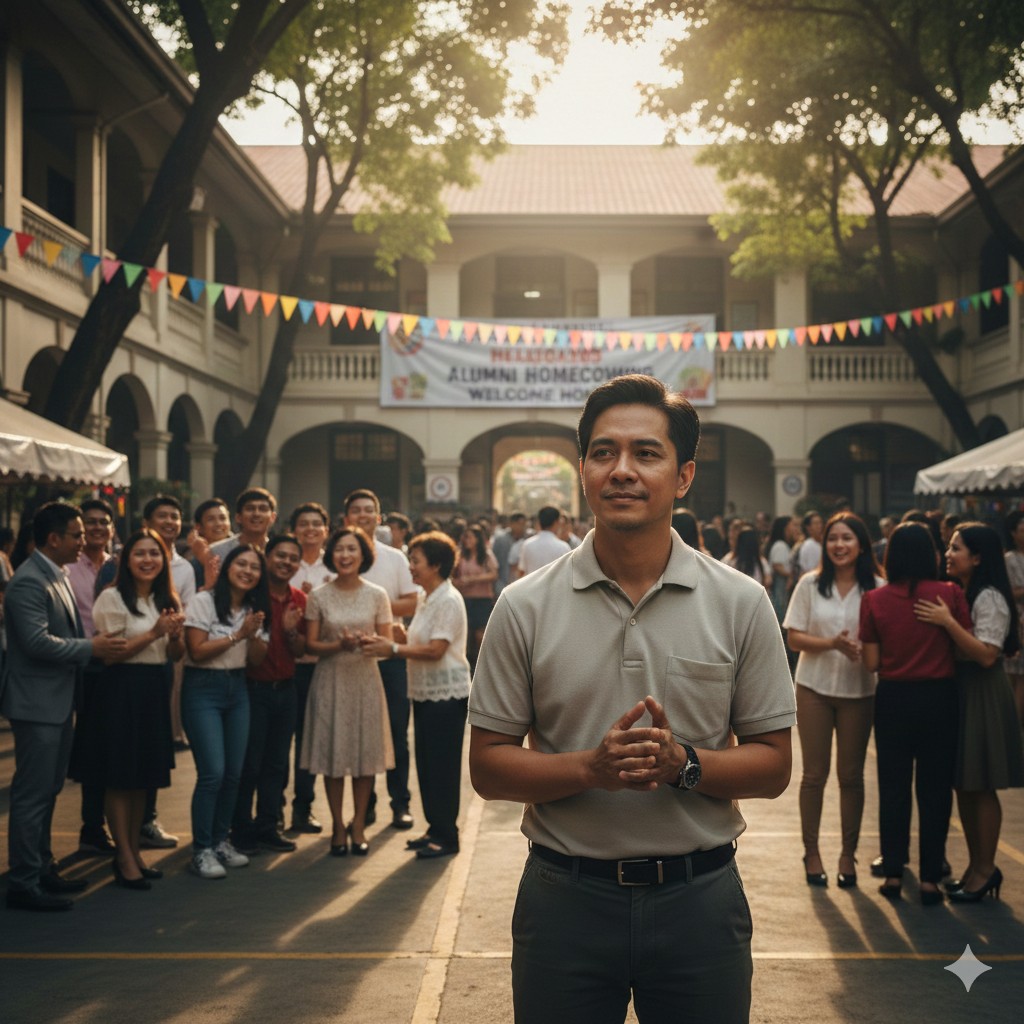
As the homecoming ends, group photos are taken. The unsuccessful alumnus stands at the side, smiling softly. There is no spotlight, no recognition, but there is belonging. Despite everything, this place is still home.
Perhaps the true purpose of alumni homecomings is not only to honor success, but to remind everyone where they began and to celebrate all forms of growth, visible or quiet. Because success is not always loud, and not every meaningful journey is finished when one comes home.